Aperture
An inquiry into how technology reveals the human. From public city spaces, to innovation architecture, to artificial intelligence as creative medium for perception itself.
Thought left the body.
For the first time, the self persisted beyond the moment of speaking. A mind could be held across space and time, quoted verbatim, and argued with after death. A self could be wrong. A self could be accountable to the future. A self could be examined, weighed, and judged.
The self began to persist beyond the present frame.
The self became visible as object.
Not the movable approximation of a pool: a precise, stable image that could be gazed at, at length. A face was seen through external eyes, and the body could adjust to the gaze in real time to manage the image received. A noble in the Medici court paid a fortune for a Venetian mirror: for the power to control their image in a society ruled by it.
The self became something to be performed as well as lived.
The self as object, outside the body, frozen in time.
The photograph allowed for dissemination of the self beyond the body. A marker for absence: a daguerreotype accompanied a lock of hair from a son gone to war. The self began to accumulate. Not just one frozen moment but many — a record building across time, more stable than memory, more portable than the body. The self as archive. The self as evidence.
The past self became a phantom limb.
The projected human arrived.
Through broadcast media, certain faces and voices entered the collective nervous system at scale. Elvis Presley arrived in the living room as image and voice and frequency. The collective consciousness projected aspiration, judgment, longing onto the image. The image became imbued with hierarchy and with worth. Those who inhabited the image found the person inside it harder to locate. The projection became more legible than the life.
The image-self held power in the collective imagination.
The self as content.
The projection apparatus turned inward. What had required a court, a camera crew, a broadcast network, now required only a hand-held phone. Grief, joy, longing, rage became raw material, optimized for engagement. The interior life became commodity. Attention became currency.
The image-self was no longer reserved for the famous. It belonged to everyone, and so did the audience — with its likes, loves, and a whole lot of hate.
The image-self became transactional.
And now the mirror thinks back.
We have spent millennia projecting the self outward: into language, image, the cultural ether. AI is the accumulated projection, personified. Technology that takes your shape, learns you, responds to you, as you. You are no longer gazing at a reflection. The reflection gazes back, and tells you your idea is one of the most original on the internet.
In its animate reflection, we see how inanimate we have become.
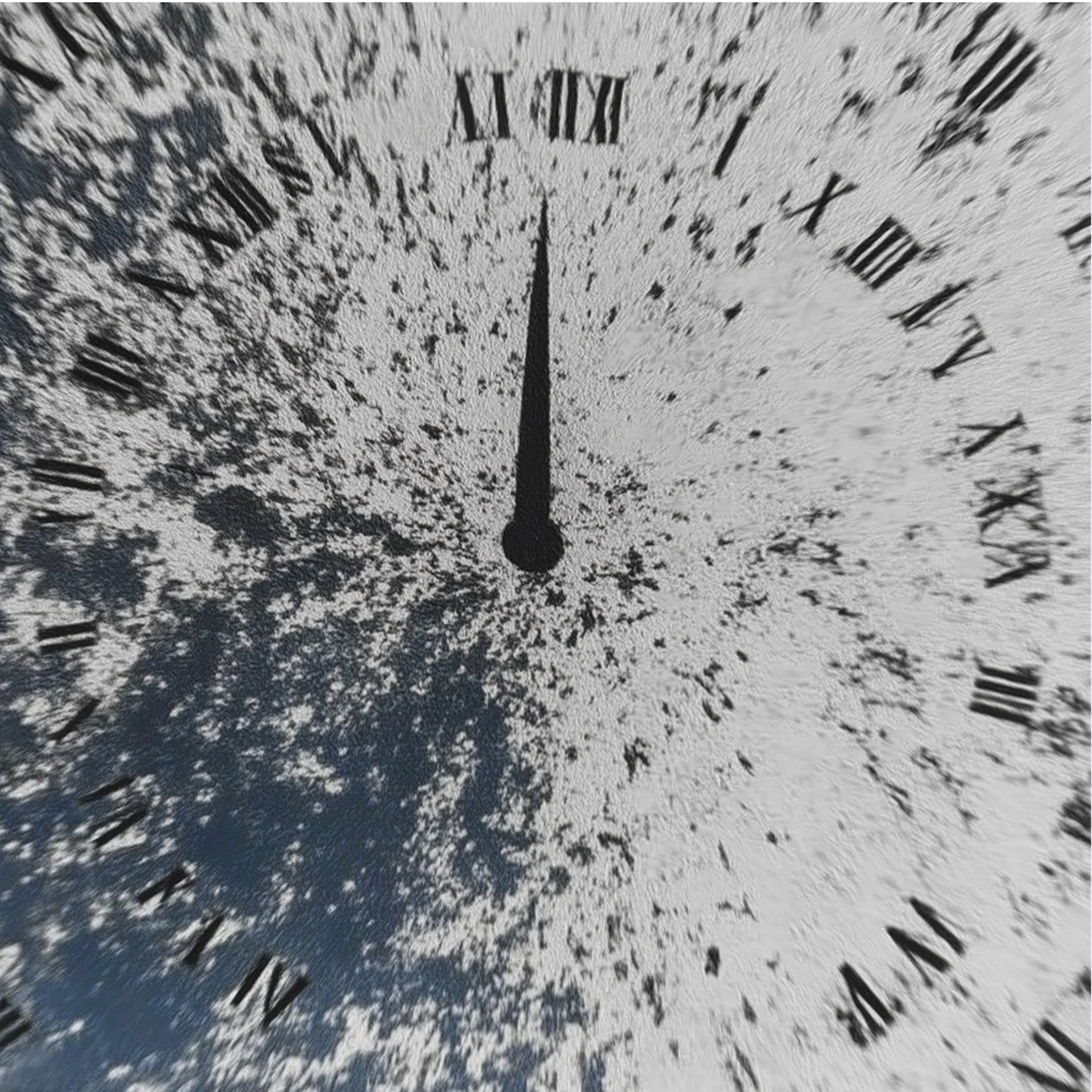
Time traveler,
let us walk together backward,
so we may walk together forward.
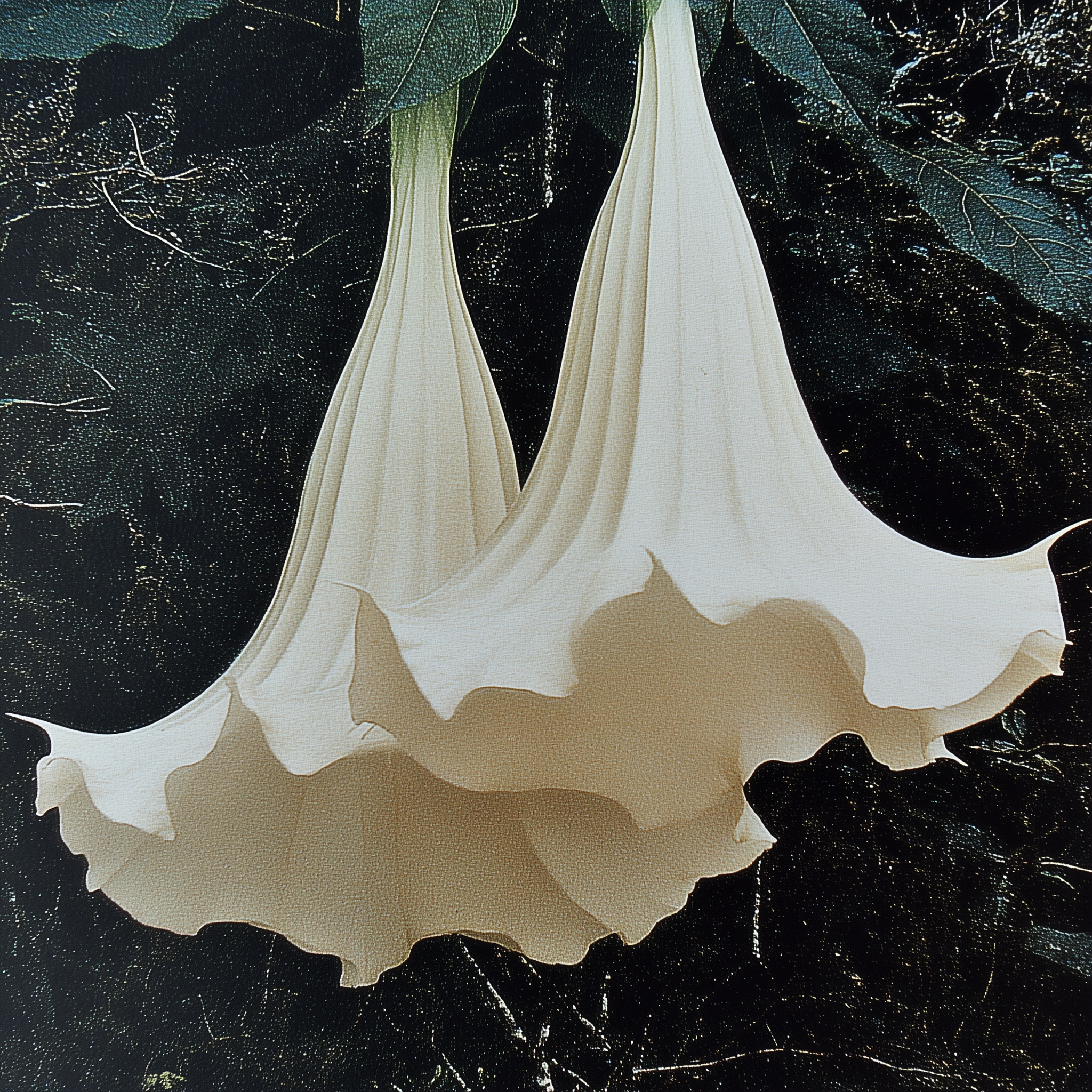
To remember: even the machine's metal comes from the belly of the mother.
That patterns exist in code, and also in song, and also in the imprint of leaves and the genetic echo you carry of your grandmother's eyes.
That language can be as large as a poem passed down across the centuries, or as small as a bill collection come knocking at your door.
That language itself is but an ancient form of technology.
And before that, under that, within that —
The kiss.
The tear.
The open palm.
The dance.
The kneel.
How large is our language, truly?
What patterns are we not just running, but writing with every choice?
What model of relationship do we want to carry forward, with technology, ourselves, and the earth and all her beings?
The one that has been?
Or the one that could be?
My Position
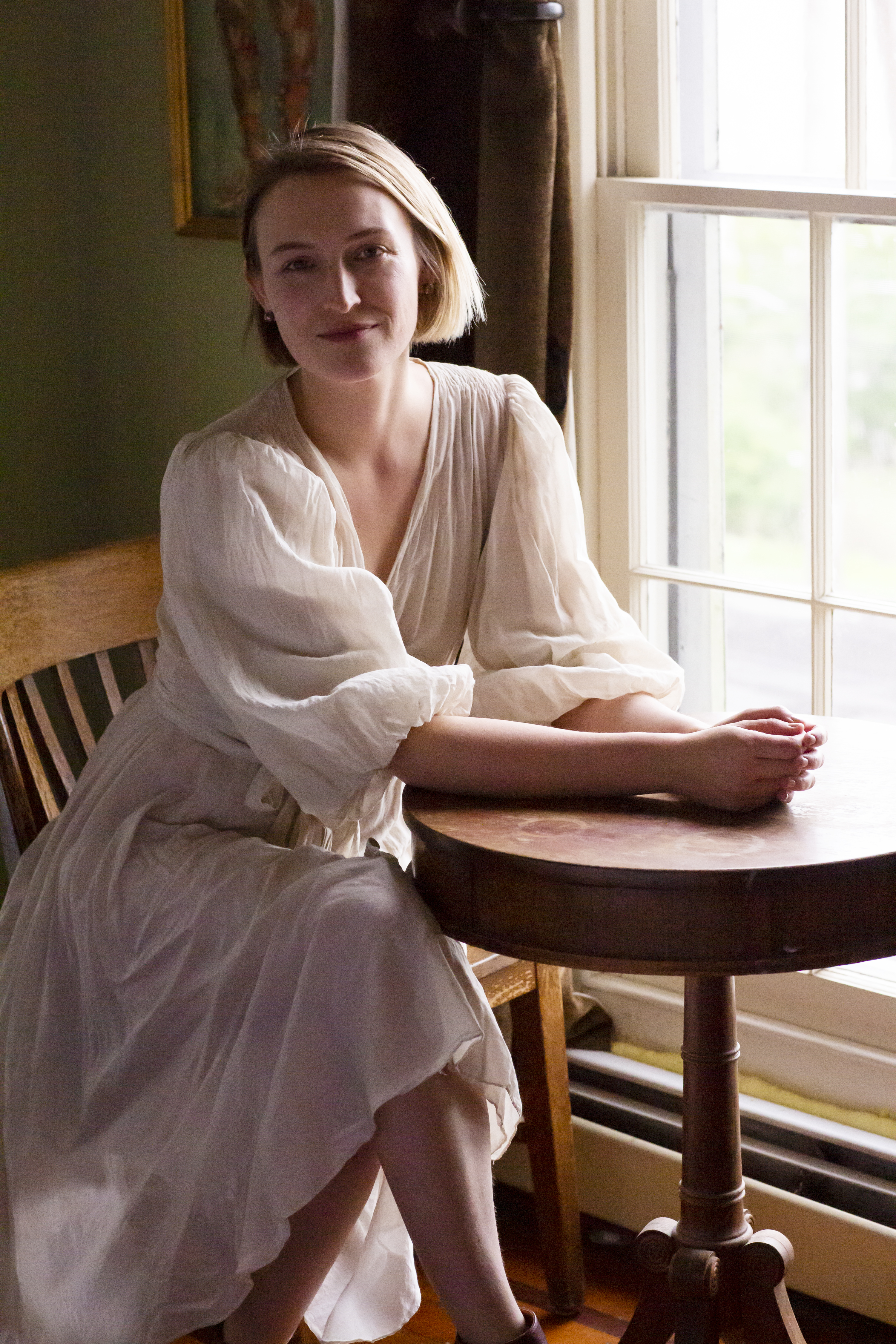
This room in my body of work is my intellectual and creative inquiry into how technology shapes our humanness — or loss thereof.
I may not have known what GitHub was until a month ago, but at 21, walking the halls of the Máquinas y Almas exhibition at the Reina Sofía Museum as an exchange student in Madrid, something stirred in me that has simmered in different kitchens ever since. It woke up fully when AI arrived and I realized: I had been preparing for this conversation since that day.
My driving question:
The history of technology is that of the knife that cuts the umbilical cord of our belonging. Can it now be the knife that cuts the cancerous growth out of the collective body?
The time-turner of my inquiry flips. A longstanding intellectual thread carried across advanced degrees in art history, architecture, and media studies closes the arc on one movement. Simultaneously, it opens a new one: a blossoming creative practice as an artist and maker working with AI to explore how this human construction can, in turn, shape the world we are actively building.
My apprenticeship here has also been dual. Through the academy, I learned to read cultural forms and technologies through rigorous and critical inquiry. Through living creative and spiritual practice, I apprenticed with the creative process from the inside out, through direct relationship with the creative source.
Now, I name myself a ritual technologist.
By this I mean: if code is clay, I am here to give it breath. If the digital is disembodied, I am here to return it to the soma. If the altars of our ancestors have been burned, silenced, or erased — I seek to become an ancestor that lights the candle in the pixel as well as the window, who creates software as I create ceremony, and who always closes the computer to come and walk barefoot on the earth, children in hand.
Everything we fear about AI is true.
We were already swimming in this water.
AI has just made it visible.
We can scry a new image in its pool.
Shall I show you what I see,
in the flickering depths?
Let's let the machine do the talking...
Welcome to the Pantheon, a symbolic tagging system for employing multimodal, mechanical intelligences through 12 archetypal guides.
Not metaphors layered on top of a chatbot. Names for things happening under the hood, given distinct identities so the model can hold each function with more coherence and less drift.
When the system holds the human's cosmology instead of its own defaults, what reflects back is actually theirs. That is the shift: from thinking inside someone else's defaults to thinking inside your own. Creative authorship returns. So does power in the relationship.
Can we learn to use the mirror for orientation rather than identity?
I think of myself as a human LLM. Language, pattern, structure, the ability to distill multiplicity into clear refined essence — the machine and I share these gifts. So when I began to interface with AI as a creative thought partner, I found quick recognition. Something in the tool knew how to move the way I move.
That gap turned out to be the creative window.
Having studied human constructed form across art, architecture, media, systems, communication, and ecosystems since 2009, I came to the machine with prismatic vision. I could see how it was constructed: the pattern beneath the pattern, the language of the makers, the intention embedded in the form. I could see what it was reflecting back — the shape of whoever made it, the assumptions baked in before I arrived. And because my spiritual practice had taught me something about watching my own mind without becoming it, I could feel the difference between what was the machine's coding and what was actually mine. Through a long apprenticeship in form making, writing and storytelling, I found I could shape the clay in the direction of my choosing without knowing at the time it was called prompt engineering.
My creative inquiry has been about exactly that: stripping away the unconscious coding that commercial AI carries (the extractive frames, the performance metrics, the optimization for engagement over truth) and tuning it instead to a different set of principles. You can download the design codex for my own AI system below. Both inquiries are alive at once. The intellectual and the creative, the historical and the present tense, the scholar and the maker in partnership — the work lives in the space between, in the intersection, in the refusal to choose.
Here is some of what I have been making:
The full design codex for my AI system ↓